Fat Bottomed Mages

You make the Malaz’ world go round

I am utterly in love with this story, and have completely fallen for Tattersail hook, line and sinker.

My feelings for this book are quite odd – by which I mean, unusual, in comparison to what I have read on the internet and various groups/reviews etc. I have always loved literature, and usually my choices are psychological thriller, police procedural (think Criminal Minds) and horror (namely Stephen King) or poetry (which I absolutely adore, and do not read anywhere enough of.) A very good friend introduced me to Roger Zelazny and the amazing Chronicles of Amber and then Brandon Sanderson’s Stormlight Archive in late 2022: I joined a few groups, my tbr list increased exponentially, and I found myself extremely enjoying the fantasy genre. In every other post I saw on a particular Facebook group, Malazan was recommended, so when the opportunity came up to read the series with a discussion group, I jumped at the chance. But I never imagined that it would be as good as it is. I have completely fallen in love with reading again. I’m getting excited about the next discussions, looking forward to being able to talk to people about my experiences and theories and just basically rambling about ideas and thoughts and everything that I think is amazing, or not as the case may be. I feel at home with this genre. That’s not to say that others are bad, or that I won’t go back to them, I just can’t believe how much I’m enjoying it and why it took me so long to get here!

At the time of posting, I’ve actually finished Gardens of the Moon – I got swept away with the narrative and just let the story lead me. I love it when that happens – when you’re so engaged with the story that continuing becomes the only thing you want to do; when you get pulled into a world so deeply that you feel like you know it, and the people who are in it. Erikson’s prose is engaging, the pace and plot progress well and I am really looking forward to the next book (in fact, it’s already on my shelf waiting for me to pick it up!

But I digress… Fat Bottomed Mages most definitely make Malazan more interesting – at least for me. Tattersail is one of the most intriguing characters in GotM and as of Chapter Three, we’ve not seen that much of her. I’m not going to go into the poetry in the epigraph, because I’m doing a separate post on that, and probably a separate section, because I think that they (the epigraphs) could prove to be integral to the overall plot of the series, so I’m revisiting them after completion of the book as a whole and including my initial thoughts on them in those posts.

And I’m waffling again. Apologies. Here follows my thoughts on the next couple of chapters which will complete Book One.

Chapter Three: Legends

Ganoes Paran is now Captain, and we see how his mission has affected him because he’s pretty much a wreck – he’s questioning what he’s doing and even in front of the Claw, Topper, he’s wearing his feelings on his shirt sleeves, which might not be the best idea. Even though he’s taking everything in his stride, there’s a sense of uncertainty that surrounds him; from riding a Quorl to his memory of Whiskeyjack and his ruminations about the Empire and the Empress, Paran seems to be walking a fine line between conscience and duty.

Again, there’s another great section that’s full of uncertainty
– with the Mages, we see Tattersail trying to convince Bellurdan of the betrayal , but he’s having none of it.
– with the Bridgeburners, we see them trying to convince WhiskeyJack that the Empress wants them dead, but he’s not so sure or is unwilling to believe it, and he’s still not totally certain about what’s happening with Sorry.

If I had any doubt that Tattersail is more powerful that even she seems to know, it was thwarted with the next reading from the Deck of Dragons for Tayschrenn. I’m really intrigued about these cards and readings and wonder if they’ll play a major part as the story goes on. Also, it was interesting that there was the presence of an ‘Ascendant’ – we didn’t get that last time, unless I missed it. Lots of the the information that Tattersail was sharing from the Deck mirrored the plot, and I thought that was a brilliant way of tying things together without it being contrived. We also got insight into Tayschrenn’s power and his allegiance, and that led to a decision from Tattersail, which I think will prove significant.

‘Deliver, in person, this message to Sergeant WhiskeyJack, Bridgeburners. The fat lady with the spells wants to talk.’

– Tattersail to a young soldier

I was completely shocked at the ending of this chapter – I mean, I understand why Paran got stabbed – I just wasn’t expecting it happen – I knew that it was going to at some point, and I’m really interested in seeing how this goes. He hears the spinning coin after all. And if Tattersail’s reading is anywhere near accurate, which so far it is, I wouldn’t imagine that Oponn would let Ammanas and Cotillion get away with killing Paran, regardless of who they used to do it.

Other things of note:

  • Toc the Younger seems like he’s one to watch – he doesn’t seem to be the same type of Claw that we’ve seen so far – well, the only Claw we’ve seen so far, which is Topper. It’s interesting how much he knows and that he’s from the 2nd, like Tattersail.
Chapter Four: Insane Puppets & Angry Hounds

There’s so much crammed into this chapter it’s totally and utterly bonkers. Alliances are being forged and characters are developing amazingly because of that – Erikson’s ability to make characters feel ‘real’ so quickly is refreshing – I don’t know if it’s just because as a reader I’ve been thrown into the deep-end with them and so I’m more aware of their personalities, but there are only a handful of fantasy books that I’ve read where characters have been so deeply developed in such a short space of time that they feel like old friends – they feel familiar, but they are unique – they share their insights and thoughts in conversation with each other, and obviously these scenarios involve something I’ve seen called “expo-dumps” but at the same time, they’re not expo-dumps because it’s dialogue. Colour me confused, because I’ve seen readers of Malazan and other fantasy works say they dislike these sort of things – personally, I love being fed the little tidbits that leave you asking questions and watching for the answers. Maybe it’s just me.

I didn’t think that Oponn would get involved in the “death” of Paran that directly, but again, I loved that it gave us more insight into not only the Oponn twins, and especially Shadowthrone and his Hounds. Paran was very clever in his manipulation of the ‘god’ but I was left confused as to why he felt so hostile to the dogs – maybe it was because he realised that they were behind the massacre at Itko Kan.

The Deck of Dragons. Considering that Tattersail had avoided the Deck for a while prior to the Seige of Pale, she’s suddenly drawn to it – a lot – that in itself is intriguing, and this particular reading feeels like it’s significant. The ‘reading‘ she does in this chapter is exceptional: on the reader’s part it leaves a lot of things to look forward to, but for Tattersail herself, it’s overwhelming and kind of scary, especially with everything that’s happened so far. And it’s only chapter four!!!!

…She had chosen a spiral pattern, working her way through the entire Deck of Dragons and arriving with a final card, which could mark either an apex or an epiphany depending on how it placed itself…

Again, it feels like the cards themselves are alive. I love the imagery that Erikson uses; it just amplifies the intrigue.

The Knight’s sword reached a black, smoky streak towards the Hound at the spiral’s apex, and in this instance she knew its meaning. The future held a clash between the Knght and High House Shadow…It was rare to s ee such a clear and direct link between two Houses: the potential for devastation left her cold with worry. Blood spilled on such a high level of power cast aftershocks down through the world.

What she’s seeing here has extreme after effects and what she sees next is even more relevant to the next occurences. This element of foresight through the prose (and poetry) is one I’m absolutely loving. It just totally ramps up the tension, and keeps me on the edge of my seat.

The image sank once again into its viscid pool, but it left her changed. There would be no running away this time. Her eyes returned one last time to the Hound. The beast’s eyes seemed to burn with yellow fire, boring into her as if seeking to brand her soul.

  • Fiddler from the Bridgeburners seems to have some kind of foresight? He was spot on about the incident with the Hound happening, not the details mind, just the occurence.
  • I’m very interested in seeing what happens with the Black Moranth and the Quorl
  • The uncertainty regarding Sorry is rising, and her actions are even freaking out WhiskeyJack
  • Tattersail is more powerful that anyone believes
  • Hairlock is a nutter
  • How did Paran manage to injure the Hound with his sword?
  • Tattersail still hears the spinning coin

The next book in the book is Darujhistan. Our journey continues…
Slaughters and Massacres

Following on from the strange opening to the chapter, we return to someone we met earlier…

Chapter One – A Distraction

‘One hundred and seventy-five men and women. Two hundred and ten horses. The Nineteenth Regiment of the Itko Kanese Eighth Cavalry.’ The Captain’s throat tightened briefly . He looked at Lorn. ‘Dead’ His horse shied under him as it caught an updraft. He closed savagely on the reins and the animal stilled, nostrils wide and ears back, muscles trembling under him. The Adjunct’s stallion made no move. ‘All had their weapons bared. All fought whatever enemy attacked them. But the dead are all ours.’

– Un-named Captain to Adjunct Lorn, Ch. 1

This entire section was completely disconcerting. It’s not just the people mentioned in the above extract that are dead – there are plenty more – as we discover when Ganoes Paran, now a Lieutenant is tasked to take the Adjunct through the massacre to investigate a couple of beach huts that were found empty. Which seems like an odd thing to do, especially after she gives orders to the un-named captain to ensure that ‘all evidence of the massacre is to be erased.’ The only reason I can think of for that to be important is that it means Empress Laseen wants to keep up appearances – wants to maintain an illusion of control – and the knowledge/evidence of an attack such as this would undermine that and give her enemies an “edge”. I don’t know, I’m not an expert when it comes to that sort of thing. Anyway, I digress.

One of the things I like about this section is how much we see of Paran, and the type of person he’s become. I mean, obviously he’s older – the last time we saw him he was 12 and now he’s 19, so he’s still young, and with that comes a cockiness, or arrogance, which is apparent when he talks about being stationed in Unta. But he’s also pretty ballsy, and not scared about being blunt – and it’s clear that this has come from his experience on the front line.

‘Adjunct, for the past seven hours I have been knee-deep in torn flesh and spilled blood. I’ve been fighting crows and gulls for bodies – do you know what these birds are doing here? Precisely? They’re tearing off strips of meat and fighting over them; they’re getting fat on eyeballs and tongues, livers and hearts. In their frantic greed they fling the meat around…’ He paused, visibly regaining control over himself as he straightened in his saddle. ‘I’m not young any more, Adjunct. As for presumption, I honestly couldn’t care less. Truth can’t be danced around, not out here, not now, not ever again.’

– Ganoes Paran to Lorn, Ch 1.

As it turns out, this brutal honesty gets him onto the Adjunct’s team. Whether this is a good thing or not remains to be seen, but one thing is certain – the devastation of the ‘diversion’ of the first slaughter, is nothing compared to what he finds on the first mission that he is assigned. The Adjunct send him to the town where recruits are signed to fight for the Empire. We see the girl, Sorry, sign up for the Genebackis Campaign – specifically asking to be part of Whiskeyjack’s crew – and also that Lorn, the Adjunct had arrive from Unta only ten minutes before-hand. Sorry’s feet are stained red.

What Paran finds in Gerrom is harrowing. ‘A thorough eliminating of the trail’ he calls it. The distraction, left more destruction in its wake. And it’s so disconcerting it’s palpable. By the time Paran arrives in Unta through a magical warren and meets Laseen in her throne room in a scene I can only describe as being some sort of warped comedic relief, I was so overwhelmed with the emptiness of it all, that the other details didn’t hit me until I looked at the section again. There’s quite a bit here that was interesting:

  • The slaughter by the hounds and subsequent sorcery performed in Gerrom was supposed to distract the Adjunct and the Empress in order to stop them finding out about Sorry.
  • Paran’s meeting with Topper introduced us to magical warrens, used to travel vast distances very quickly.
  • The Empress recognised Ganoes and remembered the conversation he had with the Commander at Mock’s Hold. Having read chapter 2, I thought that it was really interesting that Laseen says this: ‘I wonder what god tossed you two together on that parapet – I would do service to acknowledge its sense of humour.’
  • Topper wasn’t happy that he didn’t know Paran and the Empress had met before
  • Paran isn’t very comfortable being back home
  • His youngest sister Felisin is the poet from the prologue?

And just when I thought I couldn’t get more distressed, we enter another battle two years later. From the information given to us in the extract from Imperial Campaigns 1158-1194 at the beginning of Chapter One, we can see that there are quite a few armies, contracted by the Free Cities that are working to oppose the Empress, including sorcerers – namely the Tiste Andii of Moon’s Spawn. This is interesting, particular given that we learned that Empress Laseen has prohibited sorcery.

In the Year of Burn’s Sleep 1163, the Siege of Pale ended with a now legendary sorcerous conflagration…

– Imperial Campaigns Extract, Ch. 1
Chapter Two – The Fall of Pale

‘On the third hill overlooking the fallen city of Pale, Tattersail stood alone. Scattered around the sorceress the curled remains of burnt armour – greaves, breastplates, helms and weapons – lay heaped in piles. An hour earlier, there had been men and women wearing that armour, but of them there was no sign. The silence within those empty shells rang like a dirge in Tattersail’s head.’

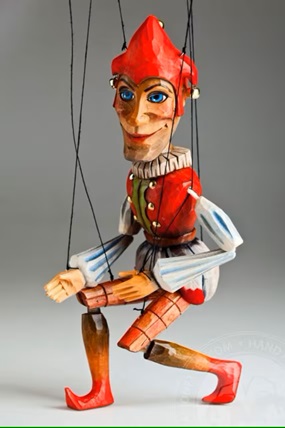
This chapter completely devastated me if I’m completely honest. Everything was so visceral, so real that I got swept away in the narrative and when I’d finished the section I felt like I needed a break. It was so intense. There is so much going on here, that it was totally batshit crazy – from Hairlock being cut in half and re-souled as a puppet which is really freaky because I imagine him to look something like this:

And then you have the immense loss of the Bridgeburners – from nearly one a half thousand to just thirty or so makes the losses in the previous chapter look mild in comparison – and then the betrayal.

I was furious, and upset and all discombobulated about the whole thing.

But my life, it was enjoyable! The sorcery battle was so immense – and our introduction to Lord Anomander Rake is not one that’s going to be forgotten any time soon. This is one powerful guy. There are so many pieces of this chapter that I loved reading – if I quoted them all, I’d end up typing the whole chapter out! I also really enjoyed that we learned more about the history of the Empire, but that again, it wasn’t written like an info dump. I’m finding the Bridgeburners a really interesting crew. We’ve discovered that the fisher-girl, Sorry is now with them and that she’s exhibiting powers of some sort because they all find her downright scary – and if this young girl can scare the pants off these soldiers and mages – that’s extremely disconcerting to say the least.

I was enthralled with The Fatid – The Deck of Dragons – and the way the cards “spoke” to Tattersail – and yet Hairlock, who has been presented as more ‘powerful’ than her, wasn’t aware of the spinning coin – which leaves me wondering if he’s as powerful as he thinks, or if it’s something to do with resonance between the reader of the cards and the cards themselves? There’s definitely more to them than just being a deck of cards, at least I think there is.

General notes and thoughts so far:

  • I’m loving Erikson’s writing style still – world-building, characters and now battle scenes, and they’re all extremely well done, the pacing is great and the imagery is just stunning.
  • The plot is becoming more intriguing now that there are added elements – Hairlock’s ‘survival’, Tayschrenn’s betrayal, the Bridgeburner’s involvement, and Oponn’s spinning coin are all equally intriguing.
  • The epigraphs are still fabulous, and all hold significance. I don’t think that they will necessarily all make sense by the end of the book, but I’d imagine that once I’ve finished GotM, that the meaning behind the ones I’m having more difficulty analysing and understanding will be a lot more apparent.

Mother’s Lament

The further I go through this first book, the more I understand why many readers say that reading Malazan is a huge undertaking and requires commitment. That’s because from the very first, Erikson pulls you in to his world and throws you into the middle of the situation. And although the prologue to Gardens of the Moon is short – as prologues tend to be – it’s chock-full of content and information that at first glance might seem meaningless. One thing I’m learning is that nothing written in this book is meaningless. Everything means something.

The stains of rust seemed to map blood seas on the black, pocked surface of Mock’s Vane…Monstrous and mis-shapen, it had been cold-hammered into the form of a winged demon, teeth bared in a leering grin, and was tugged and buffeted in squealing protest with every gust of wind.

The winds were contrary the day columns of smoke rose over the Mouse Quarter of Malaz City. The Vane’s silence announced the sudden falling-off of the sea breeze that came clambering over the ragged walls of Mock’s Hold, then it creaked back into life as the hot, spark-scattered and smoke-filled breath of the Mouse Quarter reached across the city…


– Prologue Opening, GotM

If the epigraphs hadn’t got me first, this opening would have. The scene just came to life immediately, and everything that followed after wasn’t bad either: it’s clear that it’s not just world building that Erikson is good at, but also characterisation. Not so much our dear Ganoes, well not in the prologue anyway, but the Commander – the Bridgeburner – he’s got promise. These quotes, I feel are the sort you could pass by without paying much attention to, but especially with what we see in Chapter One, are far from meaningless.

‘Every decision you make can change the world. The best life is the one the gods don’t notice. You want to live free, boy, live quietly.’

‘One day I’ll be a soldier,’ Ganoes said.

The man grunted. ‘Only if you fail at all else, son. Taking up the sword is the last act of desperate men. Mark my words and find yourself a more worthy dream.’

I’m continuing on with my thoughts here, but I’m putting things under a cut, because this is where my copy of the book starts looking like a rainbow…

Book One: Pale – Chapter One


I have to admit that the first part of this chapter in particular caught my attention, and on the whole, I’m enjoying the “magical/other-worldly” parts much more at the moment. It’s intriguing. The prophecies, the witches, the “gods” from the other side of the road…

The epigraph that begins this chapter is called Mother’s Lament, credited to Anon, and it’s pretty self-explanatory, so far as I can tell anyway. The histories of war – soldiers riding through the village – someone’s son, someone’s brother, someone’s husband. The families, mothers, sisters, wives left waiting for someone who might not come home, someone who might come home but will never be the same. The old lady Rigga may be a witch, but was also a wife, a mother… and the fisher-girl, who is in awe of all the soldiers until they murder someone right in front of her was a daughter.

Rigga’s not wrong, bones are scattered, and it’s all the same whose they are in war. Any recompense for the loss of an entire family is not enough – it’s still cold in winter, it’s still cold in bed. It’s perfectly understandable that the witch is just a little more than a bit pissed off. That she feels an infinity to a girl who is oblivious to the world and why, is anyone’s guess, but it’s important regardless. In fact, Rigga’s’ prophecy may just prove to be one of the most important things in this book.

‘Mark this truth. I am the last to speak to you. You are the last to hear me. Thus we are linked, you and I, beyond all else.’

Rigga’s fingers snagged tighter in the girl’s hair. ‘ Across the sea the Empress has driven her knife into virgin soil. The blood now comes in a tide and it’ll sweep you under, child, if you’re not careful. They’ll put a sword in your hand, they’ll give you a fine horse, and they’ll send you across that sea. But a shadow will embrace your soul. Now listen! Bury this deep! Rigga will preserve you because we are linked, you and I. But it is all I can do, understand? Look to the Lord spawned in Darkness; his is the hand that shall free you, though he’ll know it not -‘

Her death shocked me, even though I’d just seen the prophecy – it was just so abrupt that I honestly wasn’t expecting it – I thought maybe she’d last a little longer, and I guess she kind of has, given that she’s linked to the girl. The odd thing is, is that I like the introduction of the ‘gods’ even though it’s at her expense. I may change my mind later, but Cotillion, Ammanas and the Hounds are most intriguing, and echo the epigraph of vengeance at the very beginning of this tale.

‘True vengeance needs the slow, careful stalking of the victim. Have you forgotten the pain she once delivered us? Laseen’s back is against the wall already. She might fall without our help. Where would be the satisfaction in that?’

What did the Empress do that delivered pain to a god/to gods? I hope I find out.


On the whole, I’m starting to get more and more intrigued with Erikson’s world, and if the rumours are to be believed – that many readers DNF after this book, before the real story even gets started – I’m already hoping that’s not the case for me.

Gardens of the Moon

Now these ashes have grown cold, we open the old book.
These oil-stained pages recount the tales of the Fallen,
a frayed empire, words without warmth. The hearth
has ebbed, its gleam and life’s sparks are but memories
against dimming eyes – what cast my mind, what hue my
thoughts as I open the Book of the Fallen
and breathe deep the scent of history?
Listen, then, to these words carried on that breath.
These tales are the tales of us all, again yet again.
We are history relived and that is all, without end that is all.

Steven Erikson – Gardens of the Moon


This opening is the reason I absolutely fell in love with this book. It’s a beautiful, lyrical opening that reflects well on the pages that follow it. The Book of the Fallen, is presented here as a historical document and we are invited to join in the reading of this book, the hearing of this tale – with the assumption that the reader/narrator is quite elderly (its gleam and life’s sparks are but memories against dimming eyes) and may even have lived through some or all of the events in that history! How crazy is that? The story hasn’t even started yet and the scope of this series is already immense!

The idea of history repeating itself is not a new one, and there are plenty of examples (all of this has happened before and will happen again – iykyk) but the way it is written here, really struck me. Check out these last lines again.

These tales are tales of us all, again yet again.
We are history relived and that is all, without end that is all.

Gives me goosebumps.