The Beginning of Rebellion

Poisoned Berries & the Benefits of Cliff-hangers

I’ll be the first to admit that The Hunger Games (THG) isn’t much of a ‘new’ read for most – if you’ve not read the books, you’ve probably seen the films. What can I say? I always manage to be late to the party, and it’s true here for both the books and the movies. Over the festive period of 2023, I stumbled across a marathon of THG on the gogglebox – now normally, I’d read books before watching any type of adaptation, but after about five minutes of watching, somewhere in the middle of Catching Fire, I got intrigued, and started from the beginning.

Yes, I binged watched. The entire thing. Twice.

Then I got to thinking (which is never a very good thing and usually results in me causing myself more work than necessary.) I knew I had the trilogy buried somewhere in my extremely disorganised bookshelves, so I went to find them. Four days and a whole room of semi-organised shelves later, I sat down and started the first book – and I have to say, I was pleasantly surprised.

There are elements of the book that add a depth that you simply don’t get by watching the movie first and it was those additional elements that kept me turning the pages. Katniss is thrown into a situation that she had deliberately tried to avoid, for both herself and her sister. This right here is the hook – in the movie, it’s honourable and brave – and it’s the same in the book, but add to that the explanation of how the drawing works and there’s a whole extra shock factor – Katniss’ has 20 entries into the draw for the games – because of the convoluted nature of the capitol and how it oppresses it’s people. Twenty. Accumulated over 4 years. Her sister has one, only because Katniss refused to allow her to increase that amount by using the Tesserae (an option to add your name into the draw for a meagre supply of food supplies) thereby limiting her chances of being chosen. So the fact that Prim’s name is called, and that Katniss volunteers is even more shocking because it illustrates, emphasises and reflects the hopelessness of the society in which she lives.

“There must have been some mistake. This can’t be happening. Prim was one slip of paper in thousands! Her chances of being chosen were so remote that I’d not even bothered to worry about her. Hadn’t I done everything? Taken the tesserae, refused to let her do the same? One slip. One slip in thousands. The odds had been entirely in hear favour. But it hadn’t mattered.”

Katniss already had to grow up too quickly – the care of her family becoming her responsibility when her mother suffered what can only be seen as a significant mental breakdown after the death of her husband. Everything she has ever done has been for Prim, and volunteering is no different – yet it is. The odds of her survival are not high, particularly when there are kids from other districts who are specifically trained to become tributes for the games. She knows that she is most likely going to die, and she handles it particularly well, considering the circumstances. I found her to be full of nervous energy, and a remarkable amount of anger – understandably so – but I also think that Katniss had spent so long looking after everyone else, that she’d lost her own identity, because of what she had to do and who she had to be in order to survive. Katniss has self-awareness, but low self-esteem. She’s described as sullen and hostile, which again I wasn’t surprised about, and it’s with Cinna (who I loved by the way, book and film both) who she finds the comfort to be herself.

But where Katniss shines the most is in the arena, because the Katniss in the arena is in survival mode, just like she’s been at home – except now it really is a matter of life or death. From that first moment where she ignores Haymitch’s advice and runs for the equipment shows her true nature – it’s not rebellion against authority, it’s simply who she is – she’s a fighter. She’s also skilled as a hunter, caring as an ally and vulnerable in her grief and ruminations about her emotions. That vulnerability, expected in any 16 year old girl, is what she cannot reconcile to herself, but it’s one of the most endearing traits she has. I like kick ass Katniss – the hunting, the running away from fireballs, the whole tracker-jacker scene and destroying the Career’s supply stash pyramid – it’s all very exciting and well-written. She is bad ass. But I love vulnerable Katniss: when she loves, it’s fierce.

“I’ve no idea where to go. The brief sense of home I had that one night with Rue has vanished. My feet wander this way and that until sunset. I’m not afraid, not even watchful. Which makes me an easy target. Except I’d kill anyone I met on sight. Without emotion or the slightest tremor in my hands. My hatred of the Capitol has not lessened my hatred of my competitors in the least. Especially the Careers. They, at least, can be made to pay for Rue’s death.”

But for all that, I feel like it sort of fell flat near the end… Letting Cato suffer during the ‘muttation’ attack (although it was extremely disconcerting that they shared features of the dead tributes – what on earth are the Capitol doing there? scary) felt out of place, and I preferred the way the film dealt with it, although it did serve to remind how the citizens viewed the games – prolonged suffering=more entertainment. I guess I just didn’t feel it was necessary. And the berries suicide scene was anti-climactic.

Then, Katniss simply slipped back into who she was before… and come the end of the final chapter (27 in my copy) we’re left with the remnants of a relationship, and some worries about the future. It kind of just, fizzled out…

So, I pretend that it ended in the previous chapter, and chapter 27 happens as a flashback/intro to Catching Fire, because this knife edge, this tension is how I think it should have ended. I’m not going to quote it all, but just these little sections really caught my eye. Plus I think ending on this kind of cliff-hanger is awesome.

“When I left the arena, when the trumpets played, I was supposed to be safe. From then on. For the rest of my life.”

There’s the hook.

Here’s the kicker.

“There are questions to be unravelled back home, in the peace and quiet of the woods, when no one is watching. Not here with every eye upon me. But I won’t have that luxury for who knows how long. And right now, the most dangerous part of the Hunger Games is about to begin.
Rating: 4/5 Stars

Slaughters and Massacres

Following on from the strange opening to the chapter, we return to someone we met earlier…

Chapter One – A Distraction

‘One hundred and seventy-five men and women. Two hundred and ten horses. The Nineteenth Regiment of the Itko Kanese Eighth Cavalry.’ The Captain’s throat tightened briefly . He looked at Lorn. ‘Dead’ His horse shied under him as it caught an updraft. He closed savagely on the reins and the animal stilled, nostrils wide and ears back, muscles trembling under him. The Adjunct’s stallion made no move. ‘All had their weapons bared. All fought whatever enemy attacked them. But the dead are all ours.’

– Un-named Captain to Adjunct Lorn, Ch. 1

This entire section was completely disconcerting. It’s not just the people mentioned in the above extract that are dead – there are plenty more – as we discover when Ganoes Paran, now a Lieutenant is tasked to take the Adjunct through the massacre to investigate a couple of beach huts that were found empty. Which seems like an odd thing to do, especially after she gives orders to the un-named captain to ensure that ‘all evidence of the massacre is to be erased.’ The only reason I can think of for that to be important is that it means Empress Laseen wants to keep up appearances – wants to maintain an illusion of control – and the knowledge/evidence of an attack such as this would undermine that and give her enemies an “edge”. I don’t know, I’m not an expert when it comes to that sort of thing. Anyway, I digress.

One of the things I like about this section is how much we see of Paran, and the type of person he’s become. I mean, obviously he’s older – the last time we saw him he was 12 and now he’s 19, so he’s still young, and with that comes a cockiness, or arrogance, which is apparent when he talks about being stationed in Unta. But he’s also pretty ballsy, and not scared about being blunt – and it’s clear that this has come from his experience on the front line.

‘Adjunct, for the past seven hours I have been knee-deep in torn flesh and spilled blood. I’ve been fighting crows and gulls for bodies – do you know what these birds are doing here? Precisely? They’re tearing off strips of meat and fighting over them; they’re getting fat on eyeballs and tongues, livers and hearts. In their frantic greed they fling the meat around…’ He paused, visibly regaining control over himself as he straightened in his saddle. ‘I’m not young any more, Adjunct. As for presumption, I honestly couldn’t care less. Truth can’t be danced around, not out here, not now, not ever again.’

– Ganoes Paran to Lorn, Ch 1.

As it turns out, this brutal honesty gets him onto the Adjunct’s team. Whether this is a good thing or not remains to be seen, but one thing is certain – the devastation of the ‘diversion’ of the first slaughter, is nothing compared to what he finds on the first mission that he is assigned. The Adjunct send him to the town where recruits are signed to fight for the Empire. We see the girl, Sorry, sign up for the Genebackis Campaign – specifically asking to be part of Whiskeyjack’s crew – and also that Lorn, the Adjunct had arrive from Unta only ten minutes before-hand. Sorry’s feet are stained red.

What Paran finds in Gerrom is harrowing. ‘A thorough eliminating of the trail’ he calls it. The distraction, left more destruction in its wake. And it’s so disconcerting it’s palpable. By the time Paran arrives in Unta through a magical warren and meets Laseen in her throne room in a scene I can only describe as being some sort of warped comedic relief, I was so overwhelmed with the emptiness of it all, that the other details didn’t hit me until I looked at the section again. There’s quite a bit here that was interesting:

  • The slaughter by the hounds and subsequent sorcery performed in Gerrom was supposed to distract the Adjunct and the Empress in order to stop them finding out about Sorry.
  • Paran’s meeting with Topper introduced us to magical warrens, used to travel vast distances very quickly.
  • The Empress recognised Ganoes and remembered the conversation he had with the Commander at Mock’s Hold. Having read chapter 2, I thought that it was really interesting that Laseen says this: ‘I wonder what god tossed you two together on that parapet – I would do service to acknowledge its sense of humour.’
  • Topper wasn’t happy that he didn’t know Paran and the Empress had met before
  • Paran isn’t very comfortable being back home
  • His youngest sister Felisin is the poet from the prologue?

And just when I thought I couldn’t get more distressed, we enter another battle two years later. From the information given to us in the extract from Imperial Campaigns 1158-1194 at the beginning of Chapter One, we can see that there are quite a few armies, contracted by the Free Cities that are working to oppose the Empress, including sorcerers – namely the Tiste Andii of Moon’s Spawn. This is interesting, particular given that we learned that Empress Laseen has prohibited sorcery.

In the Year of Burn’s Sleep 1163, the Siege of Pale ended with a now legendary sorcerous conflagration…

– Imperial Campaigns Extract, Ch. 1
Chapter Two – The Fall of Pale

‘On the third hill overlooking the fallen city of Pale, Tattersail stood alone. Scattered around the sorceress the curled remains of burnt armour – greaves, breastplates, helms and weapons – lay heaped in piles. An hour earlier, there had been men and women wearing that armour, but of them there was no sign. The silence within those empty shells rang like a dirge in Tattersail’s head.’

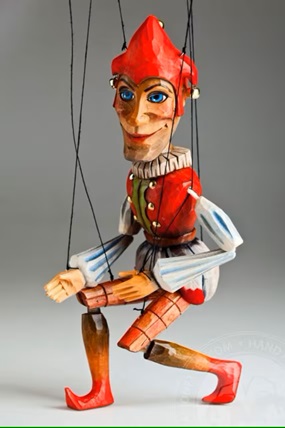
This chapter completely devastated me if I’m completely honest. Everything was so visceral, so real that I got swept away in the narrative and when I’d finished the section I felt like I needed a break. It was so intense. There is so much going on here, that it was totally batshit crazy – from Hairlock being cut in half and re-souled as a puppet which is really freaky because I imagine him to look something like this:

And then you have the immense loss of the Bridgeburners – from nearly one a half thousand to just thirty or so makes the losses in the previous chapter look mild in comparison – and then the betrayal.

I was furious, and upset and all discombobulated about the whole thing.

But my life, it was enjoyable! The sorcery battle was so immense – and our introduction to Lord Anomander Rake is not one that’s going to be forgotten any time soon. This is one powerful guy. There are so many pieces of this chapter that I loved reading – if I quoted them all, I’d end up typing the whole chapter out! I also really enjoyed that we learned more about the history of the Empire, but that again, it wasn’t written like an info dump. I’m finding the Bridgeburners a really interesting crew. We’ve discovered that the fisher-girl, Sorry is now with them and that she’s exhibiting powers of some sort because they all find her downright scary – and if this young girl can scare the pants off these soldiers and mages – that’s extremely disconcerting to say the least.

I was enthralled with The Fatid – The Deck of Dragons – and the way the cards “spoke” to Tattersail – and yet Hairlock, who has been presented as more ‘powerful’ than her, wasn’t aware of the spinning coin – which leaves me wondering if he’s as powerful as he thinks, or if it’s something to do with resonance between the reader of the cards and the cards themselves? There’s definitely more to them than just being a deck of cards, at least I think there is.

General notes and thoughts so far:

  • I’m loving Erikson’s writing style still – world-building, characters and now battle scenes, and they’re all extremely well done, the pacing is great and the imagery is just stunning.
  • The plot is becoming more intriguing now that there are added elements – Hairlock’s ‘survival’, Tayschrenn’s betrayal, the Bridgeburner’s involvement, and Oponn’s spinning coin are all equally intriguing.
  • The epigraphs are still fabulous, and all hold significance. I don’t think that they will necessarily all make sense by the end of the book, but I’d imagine that once I’ve finished GotM, that the meaning behind the ones I’m having more difficulty analysing and understanding will be a lot more apparent.